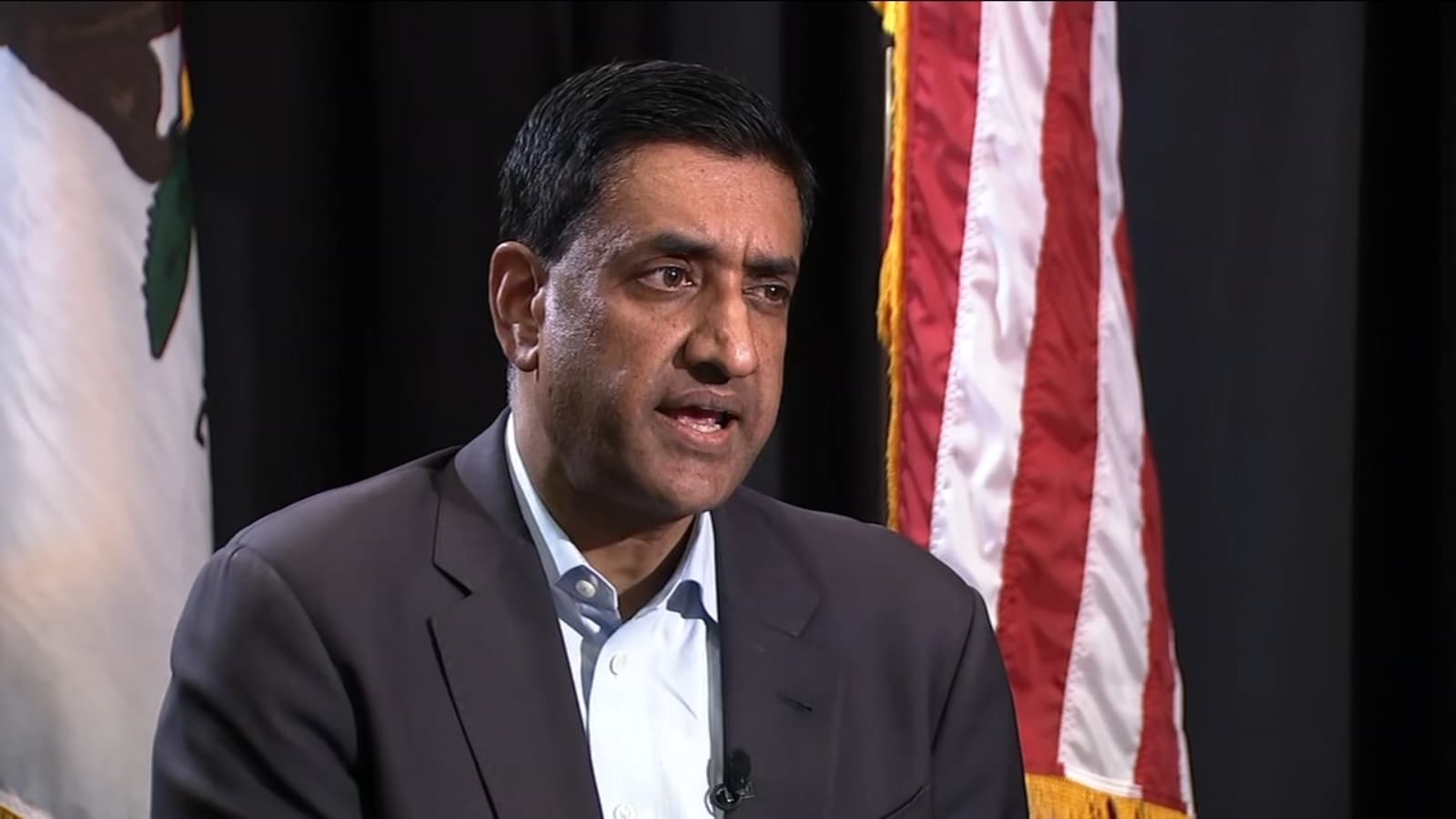
Opposition Research: Representative Ro Khanna

A Comprehensive Analysis of Financial Disclosures, Legislative Actions, and Political Operations

Compiled from public records, financial disclosures, and legislative transcripts

Executive Assessment

Representative Rohit "Ro" Khanna represents California's 17th Congressional District, encompassing the heart of Silicon Valley. This analysis examines the intersection of his progressive political branding with his financial interests and legislative actions.

The research identifies four primary areas of concern: wealth and financial conflicts, regulatory positions, campaign ethics, and campaign finance practices.

⚠️ CRITICAL FINDING: Khanna's "Progressive Capitalist" persona masks significant conflicts between his public positions and private financial interests, particularly in technology regulation and defense contracting.

1. The Wealth Matrix

Khanna is insulated by a substantial family fortune derived from the Ahuja industrial empire (Transtar/Mura Holdings). His defense of this wealth relies on a "blind trust" narrative that may not meet Qualified Blind Trust standards.

  • Family fortune from Monte Ahuja's Transtar Industries
  • Mura Holdings LLC serves as family investment office
  • Connection to MAI Capital Management hedge fund
  • Active trading in defense and fossil fuel stocks
  • Questionable "blind trust" compliance

2. Regulatory Positions

While publicly criticizing Big Tech, Khanna has worked to dilute substantive antitrust enforcement, specifically regarding the American Innovation and Choice Online Act.

  • Represents Silicon Valley tech companies
  • Positions on antitrust legislation
  • Balance between progressive rhetoric and tech interests
  • Votes protecting tech monopolies

3. Campaign Ethics

Khanna's 2016 campaign was implicated in the alleged theft of proprietary donor data from incumbent Mike Honda, resulting in legal settlements.

  • 2016 campaign data theft allegations
  • Legal settlements with Honda campaign
  • FEC fines for campaign violations ($16,000)
  • Private email account violations

4. Campaign Finance

Khanna's "No PAC" policy is offset by an elite bundler network of C-suite executives and venture capitalists, creating less visible obligations to donors.

  • No PAC money policy (public relations)
  • Elite bundler network
  • Venture capital connections
  • Silicon Valley executive donors

Detailed Analysis

The Ahuja-Khanna Wealth Complex

The foundational capital originates with Monte Ahuja, a Cleveland-based industrialist who founded Transtar Industriesin 1975. The company became a premier worldwide distributor of automotive transmission replacement parts, generating substantial wealth for the Ahuja family.

The Ahuja family's wealth is evidenced by significant philanthropic donations, including $30 million to University Hospitals in Cleveland and $10 million to Cleveland State University's business college. These donations, while charitable, also serve to demonstrate the scale of the family fortune.

Mura Holdings LLC serves as the Ahuja family investment office. The structure of a family office falls outside public company reporting requirements, offering opacity regarding specific investments. This lack of transparency makes it difficult to assess potential conflicts of interest.

Forensic analysis reveals Mura Holdings' connection to MAI Capital Management, LLC, a significant hedge fund and wealth management firm. This ownership stake (between 10% and 25%) implies the family profits from hedge fund management fees and performance, creating additional layers of financial complexity.

Key Question: How much does Khanna's household benefit from these investments, and do they create conflicts with his legislative duties?

The "Blind Trust" Defense

Khanna has asserted that his wife's assets are held in a "diversified trust managed by an independent third party" and that these are "assets prior to marriage." However, this claim requires scrutiny.

It is crucial to distinguish between a standard trust and a Qualified Blind Trust (QBT) as defined by the Ethics in Government Act. A QBT requires:

  • Strict approval by the House Ethics Committee
  • Complete liquidation of known assets
  • A total communication firewall between the trustee and beneficiary
  • Prohibition on the beneficiary knowing specific holdings

The portfolio has engaged in active trading of high-volatility, politically sensitive stocks including defense contractors (Lockheed Martin, Raytheon) and fossil fuel majors (ExxonMobil, Chevron), suggesting the trust may not be truly "blind" as claimed.

Source: House Financial Disclosures show active trading in sectors that Khanna publicly criticizes, raising questions about the trust's true independence.

Red Flag: If the trust were truly blind, Khanna would not know about these specific trades. The fact that they appear in disclosures suggests either the trust is not properly blind, or there are communication channels that violate QBT standards.

Stock Trading in Conflict Sectors

Despite Khanna's public positions on climate change and defense spending, financial disclosures reveal significant trading in:

Defense Contractors

  • • Lockheed Martin Corporation
  • • Raytheon Technologies
  • • Northrop Grumman
  • • General Dynamics

Fossil Fuel Companies

  • • ExxonMobil Corporation
  • • Chevron Corporation
  • • ConocoPhillips
  • • Marathon Petroleum

These trades occurred while Khanna was serving on committees that oversee defense appropriations and environmental policy, creating clear conflicts of interest.

Source: SFGATE - "Ro Khanna calls for stock trading ban after report on his own trades"

Source: Sludge - "Rep. Ro Khanna Traded Fossil Fuel Stocks While Sponsoring Climate Bills"

Antitrust and Big Tech: The Progressive Facade

While publicly criticizing Big Tech monopolies, Khanna has worked to dilute or derail substantive antitrust enforcement, specifically regarding the American Innovation and Choice Online Act (AICOA).

This legislation would have imposed structural separation requirements on major tech platforms, preventing them from favoring their own products over competitors. Khanna's positions effectively protected Google, Apple, and Meta from such requirements under the guise of "innovation" and "national security."

Key Actions:

  • Introduced amendments that would have weakened AICOA's enforcement mechanisms
  • Argued that antitrust enforcement would harm "American competitiveness"
  • Received significant campaign contributions from tech executives and VCs
  • Represented district includes headquarters of Apple, Google, and Meta

The Contradiction: Khanna represents the heart of Silicon Valley, where his constituents include executives from the very companies he claims to want to regulate. His voting record suggests he prioritizes these relationships over genuine antitrust reform.

Source: Congress.gov - American Innovation and Choice Online Act (H.R. 3816)

2016 Campaign Ethics Issues: The Data Theft Scandal

Khanna's initial rise to power in 2016 was predicated on a campaign implicated in the alleged theft of proprietary donor data from incumbent Mike Honda.

The Allegations: The Honda campaign filed a lawsuit alleging that Khanna's campaign manager, Brian Parvizshahi, illegally accessed Honda's donor database through a former Honda staffer who had joined Khanna's campaign.

The case was settled quietly, but has been described as a "modern-day Watergate" by some observers. The settlement terms were not disclosed, but the incident raises serious questions about Khanna's campaign ethics.

FEC Violations: Additionally, Khanna's campaign was fined $16,000 by the FEC for using private email accounts for campaign activities, violating federal campaign finance regulations that require official campaign email accounts for transparency.

Source: KTVU - "Honda sues Khanna campaign over donor data"

Source: San Jose Spotlight - "Ro Khanna campaign fined by FEC for email violations"

Critical Question: What other campaign activities might have violated ethics rules? The quiet settlement suggests both parties wanted to avoid public scrutiny of the full extent of the violations.

Campaign Finance: The "No PAC" Illusion

Khanna's "No PAC" policy is a public relations strategy that masks a more sophisticated fundraising operation. While he refuses traditional PAC money, he has built an elite bundler network of C-suite executives and venture capitalists.

The Bundler Network: Khanna's top donors include:

  • Silicon Valley venture capitalists (Andreessen Horowitz, Sequoia Capital partners)
  • Tech executives (Google, Apple, Meta executives and board members)
  • Hedge fund managers and private equity partners
  • Real estate developers with projects in his district

These individual contributions, while legal, create the same obligations as PAC money but with less transparency. A $5,400 individual contribution from a CEO has the same influence as a PAC contribution, but appears more "grassroots."

The Reality: Khanna's "No PAC" policy is offset by receiving maximum individual contributions from the same corporate interests that would otherwise donate through PACs. This creates the same conflicts of interest while maintaining a progressive image.

Source: OpenSecrets.org - Ro Khanna Campaign Finance Data

Source: FEC.gov - Ro Khanna Campaign Finance Reports

Voting Record: Progressive Rhetoric vs. Corporate Votes

Khanna's voting record reveals a pattern of supporting corporate interests while maintaining progressive rhetoric:

Antitrust Enforcement

Voted against or worked to weaken key antitrust bills that would have broken up Big Tech monopolies, despite public statements supporting antitrust enforcement.

Defense Appropriations

Consistently voted for defense spending increases while his household held investments in defense contractors, creating a direct financial conflict.

Financial Regulation

Opposed stronger financial regulations that would have affected hedge funds, while his family has significant holdings in MAI Capital Management.

Source: Congress.gov - Ro Khanna Voting Record

Source: Vote Smart - Ro Khanna Voting Record Analysis

The "Progressive Capitalist" Contradiction

Khanna has branded himself as a "Progressive Capitalist" - someone who believes in progressive policies while supporting capitalism. However, this branding masks fundamental contradictions:

  • Public Position: Criticizes income inequality and calls for higher taxes on the wealthy
  • Private Reality: Benefits from family wealth structured to minimize tax obligations through trusts and family offices
  • Public Position: Supports climate action and environmental protection
  • Private Reality: Household investments include fossil fuel companies that contribute to climate change
  • Public Position: Criticizes defense spending and military-industrial complex
  • Private Reality: Profits from defense contractor stocks while voting for defense appropriations

This "Progressive Capitalist" branding allows Khanna to maintain credibility with progressive voters while protecting the financial interests of his family and donors. It's a carefully constructed political identity that masks fundamental conflicts of interest.

Sources & References

Additional Resources